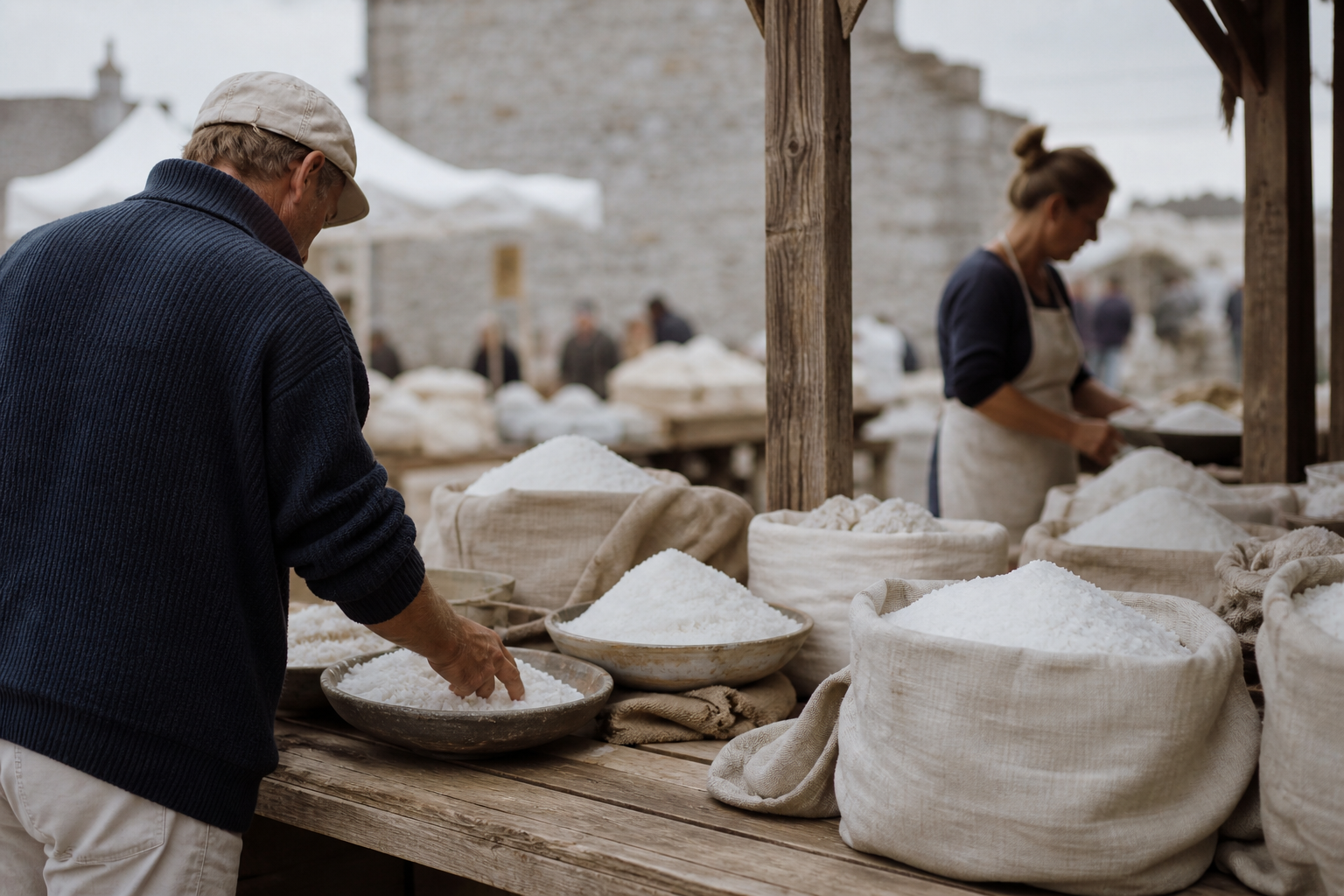
Salt for a Smooth Finish
We don't know why other craft brands skip the salt, the star ingredients just don't shine as well without it
Salt and Why It’s in Every Expression
Many coffee syrups build flavor with concentrated natural flavors, artificial flavors or extracts which create an unsatisfying aftertaste. That is why every Bon Brun expression is built on whole ingredients and finished with French Sea Salt - for full body and a smooth finish.
We build flavor from named culinary ingredients, then use salt to bring those ingredients, the espresso and the milk into balance. The result is a smooth, lingering finish rather than a flavor that feels sharp, perfumed or disconnected from the coffee.
Why Whole Ingredients and Salt Work Together
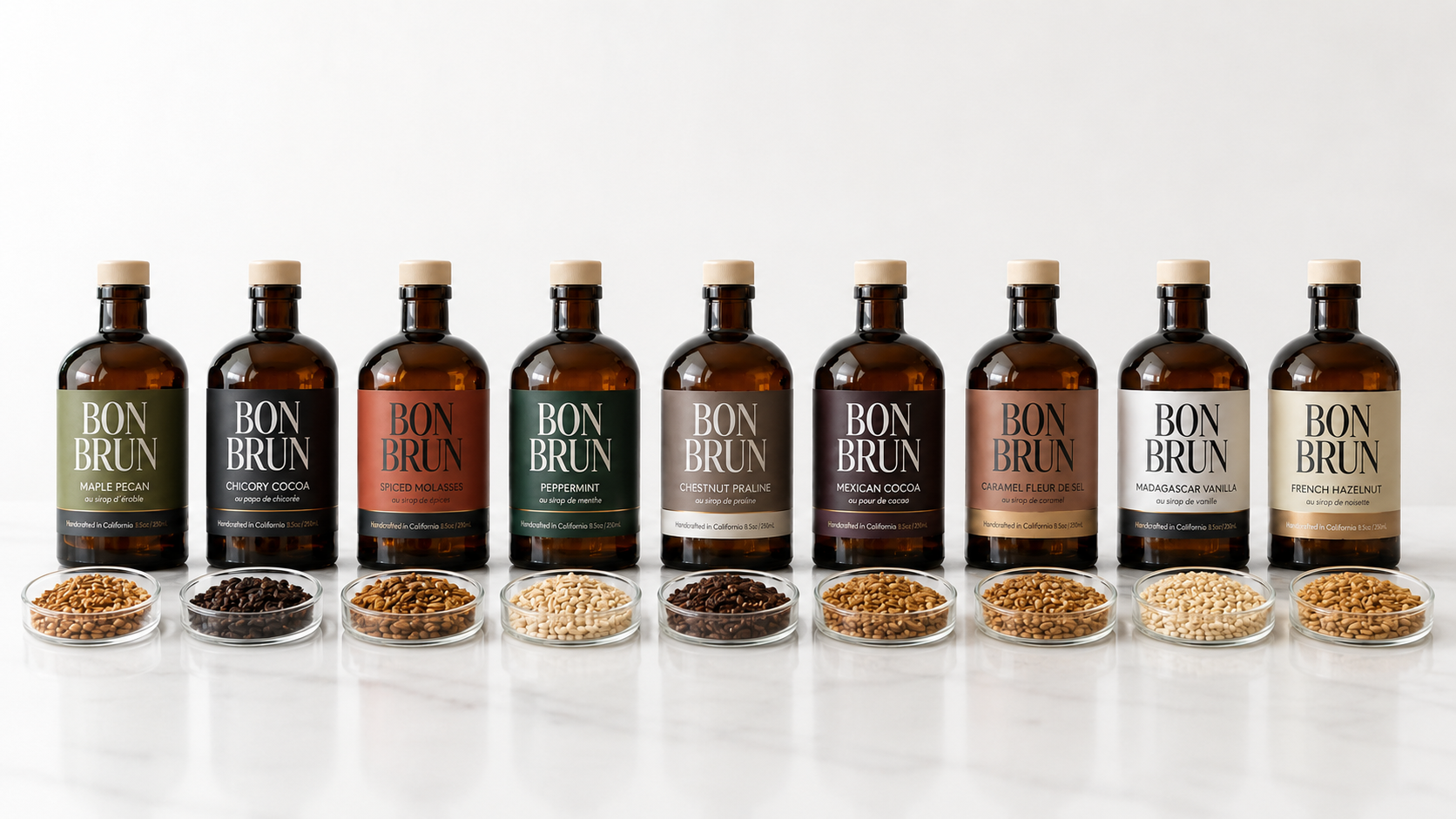
Hazelnut praline provides roasted nuts, caramelized sugar and natural fat. Pecan and cashew butters create body. Malt adds biscuit, toast and caramelized grain. Cacao and chicory contribute bitterness and depth. Vanilla bean brings floral, woody and creamy dimensions that extend beyond a single aromatic note.
Salt helps bring those elements into proportion. It does not hide the coffee or flatten the ingredients. It makes the different parts of the drink easier to perceive as one composition.
The goal is not “no aftertaste” in the literal sense. Good coffee should leave a pleasant impression after the sip. The goal is a smooth, lingering finish rather than an artificial or disconnected one.
Salt also enhances flavor without adding sugar, which is why the richer expressions can feel luxurious without tipping into cloying. And it creates a finish. A syrup without salt tends to cut off sharply after the sip. Salt is what creates that lingering close. The smooth finish that customers kept describing in tastings without being able to name what was causing it.
Two Salts Across the Range
Every expression except Caramel Fleur de Sel uses French grey sea salt. Traditionally harvested from coastal salt marshes, grey sea salt retains moisture and trace minerals from the clay-lined ponds in which it forms. The natural clay minerals impart an earthy, slightly sweet, and savory undertone that goes beyond just a "salty" taste. The old-world cultivation method keeps it free from chemical processing.
The Caramel Fleur de Sel uses Le Saunier de Camargue fleur de sel. Fleur de sel forms on the surface of salt marshes rather than the bottom. It's a delicate crust skimmed by hand during specific weather conditions. It has a lighter, more complex mineral character. In the caramel expression, where salt is part of the named flavor rather than a background element, that distinction matters.

Frequently Asked Questions
How does Bon Brun avoid an artificial aftertaste?
Bon Brun builds flavor from named culinary ingredients rather than extracts or generalized natural and artificial flavoring systems. Vanilla beans, pralines, nut butters, cacao, chicory, malt, maple sugar, peppermint leaves and whole spices contribute body and structure in addition to aroma. French sea salt then helps balance bitterness and shape the finish.
Why does typical coffee syrup leave an artificial aftertaste?
Coffee syrup can leave an artificial, perfumed or chemical-tasting aftertaste when concentrated aroma, sweetness, acidity or bitterness remains after the main flavor has faded. The effect usually reflects the complete formulation rather than one ingredient alone.
Will a natural coffee syrup still have an aftertaste?
It can. “Natural” describes the permitted source of flavoring substances, not the sensory quality of the finished syrup. A natural flavor system may still taste concentrated or disconnected from the coffee, while a syrup made from whole ingredients may also taste unbalanced if it is excessively sweet, acidic or heavily spiced.
Will an organic coffee syrup still have an aftertaste?
Yes. Organic certification concerns agricultural production and permitted materials. It does not guarantee that a syrup avoids flavor concentrates or finishes smoothly. An organic syrup can still use organic-compliant natural flavors. The full formulation determines how it tastes.
Why does Bon Brun add salt to coffee syrup?
Salt suppresses the perception of espresso bitterness, enhances sweetness without adding sugar and helps the flavor finish smoothly. It allows vanilla, nuts, cacao, chicory, caramel and spices to remain legible through milk and milk alternatives.
Does the salt make Bon Brun syrups taste salty?
No. The salt is used at a level that affects balance, flavor clarity and finish without making most expressions taste noticeably salted. Caramel Fleur de Sel is the exception in the sense that salt is an intentional part of the named flavor.
What is fleur de sel?
Fleur de sel is a delicate layer of salt crystals that forms on the surface of salt marshes and is collected by hand under suitable conditions. Bon Brun uses Le Saunier de Camargue fleur de sel in Caramel Fleur de Sel, where the salt is part of the central flavor rather than a background seasoning.
What is French grey sea salt?
French grey sea salt is traditionally harvested from salt marshes and receives its characteristic color from contact with the clay-lined ponds in which it forms. Bon Brun uses it in every expression except Caramel Fleur de Sel.
What coffee syrup has no artificial aftertaste?
No syrup can guarantee that every person will perceive the finish identically. Look for products that disclose named flavor ingredients, avoid relying primarily on generalized flavoring, balance sweetness and acidity, and explain how the formula is intended to work with espresso and milk.
Why do craft syrups often leave salt out?
Some producers prefer to let the drinker control their own salt level. Others simply haven't incorporated it into the formulation. Either way, the effect in milk is a flavor that's harder to read and a finish that cuts off rather than lingers.

From the Journal
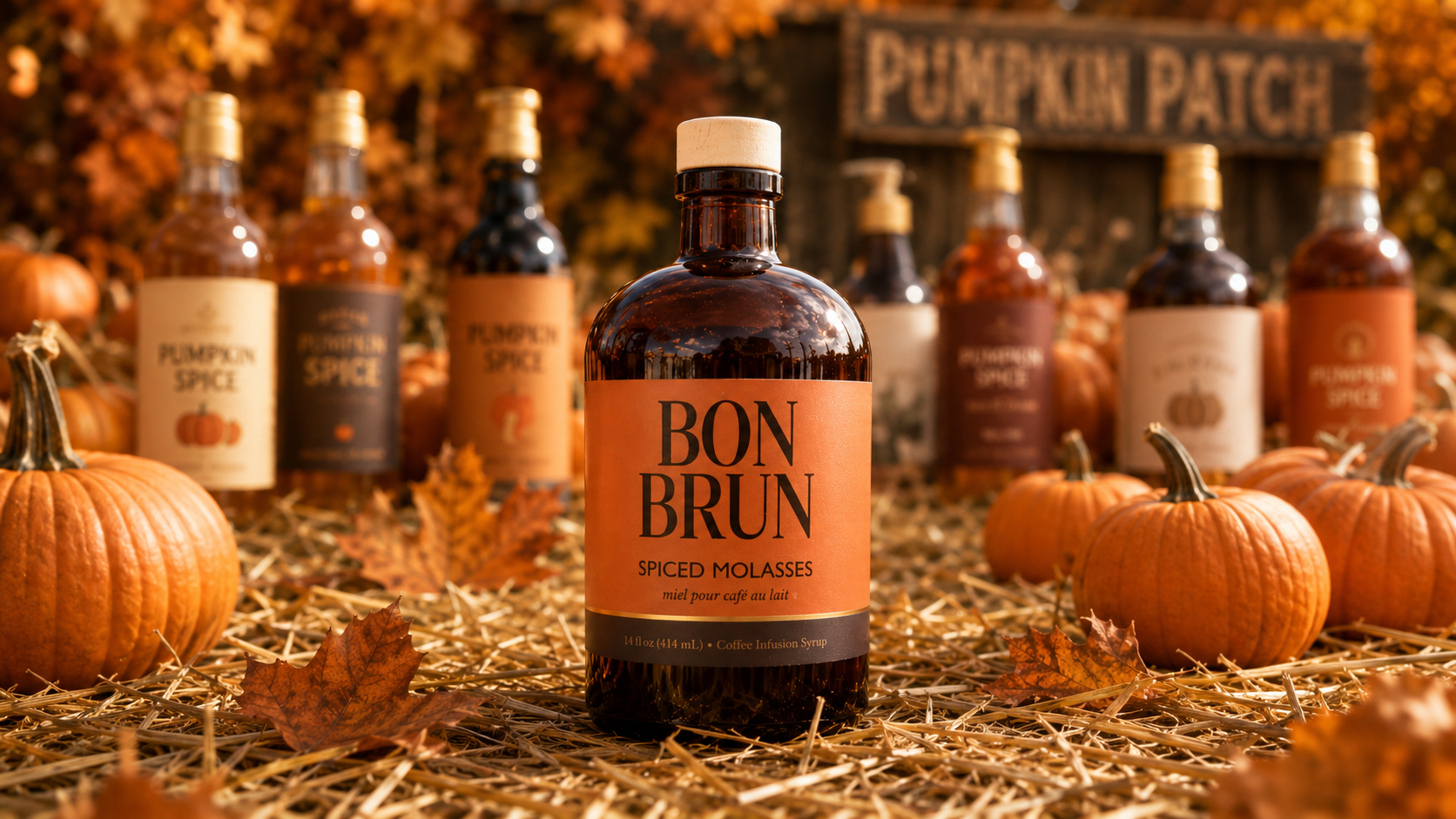
Best Pumpkin Spice Coffee Syrup: How Bon Brun Created Spiced Molasses
The Best Pumpkin Spice Coffee Syrup Doesn't Have PumpkinMost shelf-stable pumpkin spice coffee syrups do not contain pumpkin. The best pumpkin spice coffee syrup uses cashew butter to recreate that...
Read more
Best Coffee Syrup for Home Baristas (And How to Actually Tell Them Apart)
I went looking for a premium coffee syrup and came up empty. Here's what I found on every label, and what it means for your latte.
Read more