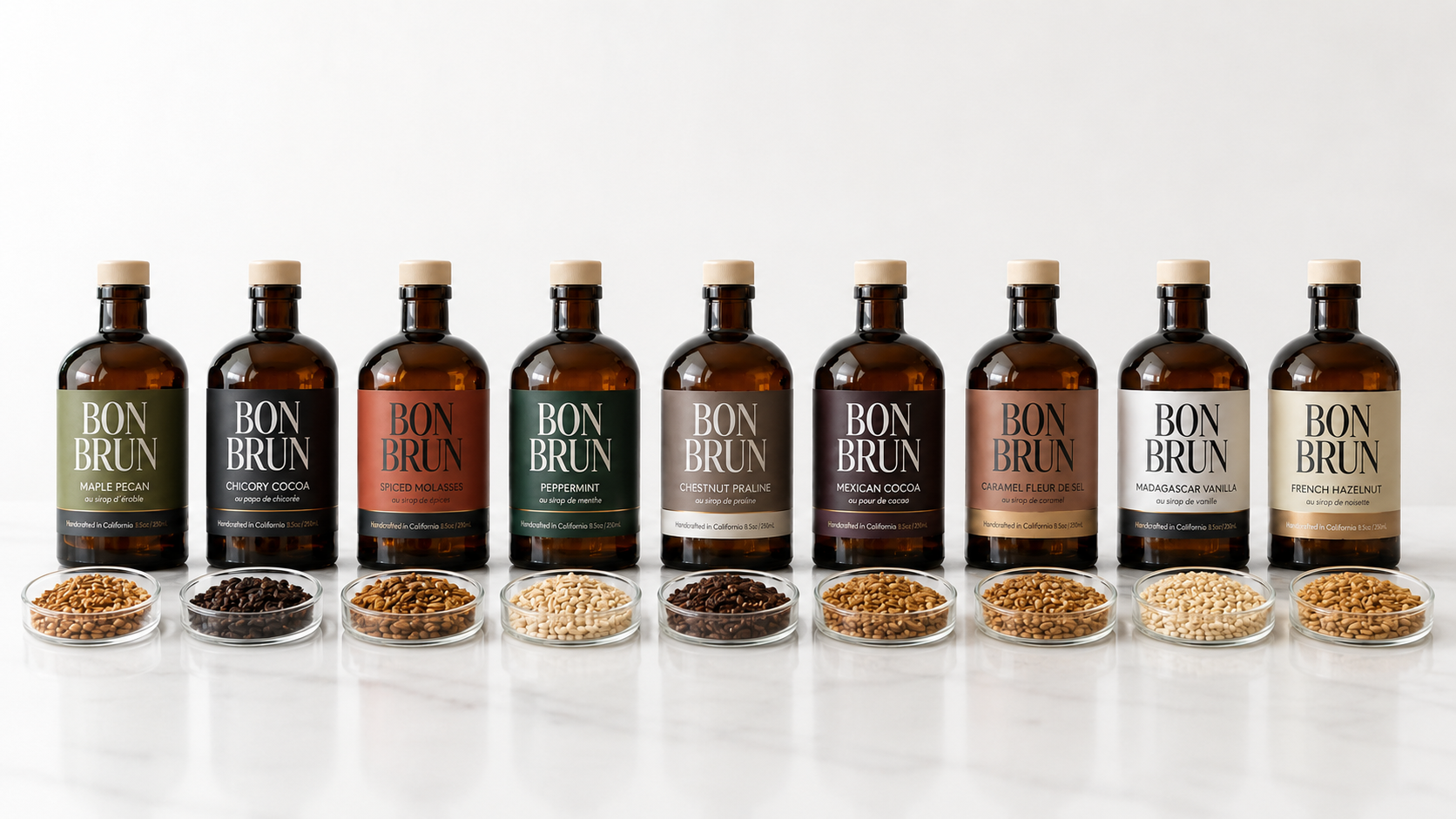
Malt is the natural way to enhance coffee syrup
Kiln-roasted malted barley adds depth, toastiness and body to a syrup, resulting in a more luxurious latte
Most coffee syrups are built around two things: sweetness and aroma. They smell like vanilla, caramel or hazelnut, but once they meet espresso, there is nothing connecting that flavor to the coffee underneath. The syrup sits on top. The espresso sits below it. The drink may be sweeter, but it does not necessarily taste more complete.
Malt is one of the ingredients we use to bridge that gap.
What Malt Is
Malt begins with barley. The grain is soaked, allowed to germinate briefly and then dried in a kiln. Changing the temperature and timing of that process creates malts with remarkably different profiles: bread crust, biscuit, honey, toasted grain, caramel, cocoa or deeper roasted notes.
It is the same family of ingredients that gives beer much of its color, body and underlying flavor. It is also responsible for the unmistakable depth of old soda-fountain malted milkshakes. Malt is not a flavoring made to imitate something else. It is a cooked grain with its own natural sugars, proteins and toasted compounds.
That distinction matters to us. Bon Brun is built around ingredients that contribute more than aroma. We want every component to change how the syrup tastes and feels once it enters the cup.
Why Malt Belongs With Espresso
During roasting, coffee develops hundreds of aromatic compounds through the Maillard reaction: the interaction of sugars and amino acids under heat. This is part of what creates coffee’s browned, nutty, toasted and caramelized character.
Kilning malt develops flavor through much of the same chemistry. It can produce pyrazines, furans, aldehydes and other compounds associated with roasted grain, toast, nuts and caramel.
That does not mean malt and espresso contain an identical set of flavors. It means they speak a related culinary language.
When we add the right malt to a syrup, it picks up the browned notes already present in the espresso and carries them into the other ingredients. Vanilla feels less separate from the coffee. Maple and pecan gain a warm, biscuity foundation. Caramel develops the darker edges of cooked sugar rather than tasting like sweetness with caramel aroma added.
The malt does not cover the espresso. It extends it.
Why Most Syrups Taste Thin
A basic syrup can deliver sugar and a recognizable aroma, but very little middle.
That missing middle is why many flavored lattes taste strangely hollow. You taste sweetness first, espresso bitterness underneath and a burst of flavoring in the nose. There is no ingredient joining those sensations into one continuous flavor.
Malt helps fill that space. Its toasted grain compounds sit between sugar and coffee, softening the transition from one to the other. It can also contribute a subtle sense of body, allowing a flavor to linger rather than disappearing immediately after the sweetness fades.
It is not there to make every Bon Brun syrup taste “malty.” In most recipes, you should not be able to identify it outright. It performs more like stock in a sauce: rarely the headline, but often the reason everything else tastes connected.
A Malt for Every Syrup
Malt is not one ingredient. It is closer to a spice cabinet built from barley.
As malted grain spends more time in the kiln, its character moves through a broad spectrum: pale cereal and fresh bread, then honey and biscuit, followed by caramel, toasted nuts and darker roasted flavors. Brewers use these differences to shape beer. We use them to decide what should happen between a syrup and espresso.
Each Bon Brun recipe gets its own malt pairing.
CaraPils is our lightest touch. It brings body and a restrained grain character without making itself obvious. In Madagascar Vanilla, it gives the vanilla bean something to rest on while keeping the flavor clean and delicate. We also use it in Peppermint, where a darker malt would trample the cool leaves and white peppercorn. CaraPils stays backstage and holds the scenery together.
Caramel 40 lands further into cooked sugar and toasted crust. It supports Caramel Fleur de Sel for obvious reasons, but it also works beautifully in Maple Pecan. Maple sugar and pecan butter can become soft and rounded together. Caramel malt gives them a browned edge, closer to the corner of a pecan pie where the filling meets the crust.
Munich 20 is toastier and more deeply grain-driven. We pair it with French Hazelnut because hazelnut praline already has sweetness and richness. Munich malt adds the dry, roasted backbone underneath it, keeping the syrup from drifting into candy.
Victory malt tastes of toasted bread, nuts and browned crust. In Chicory Cocoa, it meets the roasted bitterness of Leroux chicory and cacao nibs without making the syrup heavier or sweeter. The effect is closer to dark toast beside coffee than chocolate sauce poured into it.
Honey malt has a warm, aromatic sweetness that is distinct from simply adding more sugar. We use it in Mexican Cocoa, where it softens ceremonial cacao and gives the spices a golden middle register between cocoa bitterness and sweetness.
Caramel 60 is darker and more assertive than Caramel 40. Chestnut Praline needs that depth. Chestnut purée is mellow and earthy, while hazelnut praline is rich and sweet. The darker malt pulls both toward roasted sugar and keeps the finished flavor grounded in espresso.
Biscuit malt is dry, crisp and pastry-like. In Spiced Molasses, it plays against dark muscovado and toasted spices, adding the impression of a baked edge without turning the syrup into gingerbread. It is the difference between tasting molasses and tasting something made with molasses.
These pairings took repeated testing because the wrong malt can pull a syrup badly off course. Too pale, and it contributes little. Too dark, and it can make a delicate flavor taste burnt, dusty or overly cereal-like.
The right malt is rarely the first thing you taste. It is the ingredient that makes the rest of the flavor feel finished.
Before Bon Brun, There Was Kilned
Our original working name was Kilned.
It came from this part of the process: applying heat deliberately to build flavor rather than pouring in a manufactured flavoring. Malt is kilned. Coffee is roasted. Sugar is caramelized. Spices are toasted. Vanilla, cacao nibs and herbs are steeped under controlled heat.
Kilned captured something essential about how we work. These syrups are cooked, not flavored.
The name eventually became Bon Brun as the recipes developed a broader identity shaped by French pralines, chestnuts, chicory and sea salt. But the original idea remains inside every bottle. Flavor is not added at the end. It is developed through ingredients, temperature and time.
Why the Process Resists Industrial Production
Using malt in a syrup is not as simple as adding malt extract.
We toast selected malts to sharpen their intended character, then steep them into the recipe before filtering the syrup. Temperature, steeping time and dosage have to be controlled carefully. Too little extraction contributes nothing. Too much can introduce cereal bitterness, haze or excessive sediment.
That work fits naturally into small-batch production. It does not translate cleanly to a conventional industrial copacker.
Large beverage plants are generally designed around repeatable ingredients that can be pumped, poured and blended into large tanks. Extracts and concentrated flavors work well in that system. Toasting separate ingredients, steeping them for different lengths of time and filtering solids creates additional labor, equipment constraints and production variability. A copacker may be able to reproduce the label, but only by simplifying the process that created the flavor.
That is the compromise we are unwilling to make.
Small-batch production allows us to treat malt as a real culinary ingredient rather than a line on a formulation sheet. It takes longer. It creates more sediment to manage. It requires more attention than opening a container of flavor concentrate.
But it gives the syrup something sweetness and aroma cannot provide on their own: a structure that belongs beside espresso.
Frequently Asked Questions
Why do coffee syrups taste flat in homemade lattes?
Most syrups add sweetness and aroma, but nothing that connects those flavors to espresso. Once milk is added, the drink can taste like coffee, sugar and flavoring in separate layers. Malt helps solve this because its toasted, caramelized and nutty notes overlap with flavors already created during coffee roasting.
How can I make coffee syrup taste richer?
Adding more sugar makes syrup sweeter, not necessarily richer. Gums can thicken it, but they do not add flavor. Malt is more useful because it contributes both body and toasted depth, helping the syrup carry through espresso and milk without simply becoming heavier or sweeter.
How can I make a thicker coffee syrup without making it too sweet?
A higher sugar concentration will increase thickness, but it can also overwhelm the coffee. Malt can add perceived body and a fuller middle without requiring as much additional sugar. Invert sugar, nut butters and pralines can also improve texture, but malt is especially effective because it reinforces the roasted character of espresso at the same time.
What does malt do in coffee syrup?
Malt acts as a bridge between the syrup and the coffee. Depending on the variety, it can contribute bread crust, biscuit, honey, caramel or toasted-nut notes. These flavors support espresso instead of competing with it, which makes the finished latte taste more cohesive.
Why is malt better than simply using a thickener?
A thickener changes texture but contributes little or no flavor. Malt changes both. It adds subtle body while also introducing roasted and caramelized notes that make vanilla, caramel, cocoa, nuts and spices feel more natural in coffee.
Does malt mean Bon Brun contains alcohol?
No. Malt is germinated and kilned grain. Alcohol is only produced when sugars are fermented. Bon Brun syrups are not fermented and do not contain alcohol.