The Science: Our Organic Stance & Thoughtful Sourcing
Bon Brun balances USDA Organic ingredients with authentic international sourcing for the best possible flavor
Organic Alone Does Not Tell You How the Flavor Was Made
Organic certification tells you something important about how ingredients were grown. It doesn't tell you anything about how the flavor was made. Most organic coffee syrups still use flavoring compounds and extracts as their primary flavor source — the same carrier solvents, the same aftertaste, the same flat result in a latte. The certification changes the sourcing. It doesn't change the experience.
This is the distinction worth understanding before buying any syrup marketed as organic. Organic certification tells you how agricultural ingredients were produced. It does not tell you whether a syrup’s flavor comes from whole ingredients, extracts or concentrated flavor systems, or how the finished syrup will perform in espresso and milk. Those are separate questions. The organic label is the starting point, not the finish line.
Quality Ingredient Sourcing
Organic certification matters when it tells you something real. The USDA organic label on a bag of cane sugar from a domestic producer means something verifiable: USDA organic certification verifies production under defined standards that prohibit most synthetic pesticides and fertilizers, restrict permitted substances and require third-party certification.
It matters less when the ingredient comes from a French artisan producer who has been making hazelnut praline in the same village for generations using methods that predate modern agricultural chemicals entirely. Their process doesn't fit the USDA certification framework not because the quality is lower, but because that framework was designed for US operations and imports structured around it. Most small French producers aren't interested in paying for a US certification to access a US market that isn't their primary one.
The position is this: Bon Brun pursues organic certification where it's meaningful and doesn't chase it where the sourcing story is already better than the label.

What We Certify
Organic cane sugar and organic invert sugar are the backbone of every Bon Brun syrup. These are the two largest volume ingredients across all nine expressions — certified USDA organic, non-GMO, sourced from Golden Barrel.
Spices and herbs are certified organic and fair-trade through Frontier Co-op wherever available. Peppermint is a specific case worth calling out: peppermint leaves are heavily treated with pesticides in conventional growing, so organic sourcing there wasn't optional. It was the only way to be confident about what was going into the bottle.
Our Maple sugar is USDA organic and sourced from Barred Woods in Vermont. Maple sugar is made from boiling maple syrup down to sugar crystals rather than using maple flavoring or maple extract. This initially caused crystalization issues but we solved it by adding a bit of organic invert sugar to the recipe.
Navitas organic cacao nibs appear in several expressions: certified organic pieces of cacao bean that bring direct cocoa flavor without a liquid flavoring system.
What We Don't Certify, and Why
Foreign Ingredients
European Union food law often takes a more precautionary and restrictive approach than U.S. regulation, particularly toward additives and chemical contaminants. Food additives must be specifically authorized, evaluated for safety and justified by a technological need before they may be used. That does not make every European ingredient organic or automatically superior. It does mean that ingredients produced for the European market operate within a regulatory system that requires food additives to be specifically authorized, evaluated and used under defined conditions.
Several key ingredients come from France. French hazelnut praline from Cacao Noel. French chestnuts from the Ardeche. These are sourced from specific producers using traditional methods that in many cases predate industrial agriculture. Leroux chicory has been produced in Northern France since 1858. Their roasting process creates a caramelized, earthy depth that others can't replicate. Fleur de sel from the Camargue is harvested by hand from salt marshes using methods unchanged since the Middle Ages.

We get our Grade A Madagascar vanilla beans from Beanilla, a distributor local to Michigan. We use real Grade A Madagascar vanilla beans in every syrup, so this is something we'll continue to look into. Most of our research has led us to understand that vanilla flowers don't survive with chemical treatment, and so most vanilla beans are indeed organic, whether marketed that way or not. The best way to verify this will be by building direct relationships with vanilla bean producers, which is on our roadmap.
100% ceremonial cocoa for the Mexican Cocoa expression comes from Soul Lift Cacao, which works directly with indigenous artisan farmers. There is no official certification here.
Domestic Ingredients
Millican Pecan butter comes from a 100% pecan-only facility in San Saba, Texas. Their family-owned orchard uses only premium Texas-grown pecans with no additives, no added oils, and no preservatives. An organic certification isn't available from this producer, but the ingredient list on their product is as clean as it gets: one ingredient, pecans. We tried other pecan butters and this was the best, by far.
Octonuts cashew butter is used in the Spiced Molasses expression. It's not certified organic, but it's additive-free — no added oils, no sugar, no preservatives. The sourcing choice was made on ingredient quality and clean label status rather than certification. Obviously, flavor and texture was a big component here - it's truly creamy, velvety and high quality.
Please contact us if you have suggestions for great-tasting organic substitutes.

Balancing Flavor, Authenticity and Organic
We've gone to significant lengths to source ingredients that produce the best possible flavor. Sometimes those artisans and producers can claim organic status. Sometimes they can't. The filter we apply isn't "does this carry a USDA label" — it's "do we know where this comes from, who makes it, and how."
The ingredients that needed the most scrutiny got it. Peppermint is organic because conventional peppermint is heavily treated. Sugar is organic because it's the highest-volume ingredient and the certification is available and meaningful. Spices are organic because Frontier Co-op has done the work to make that straightforward.
For the rest, the sourcing story is the answer. We'd rather tell you exactly where the chicory comes from and why Leroux specifically than point to a label that doesn't capture what makes the ingredient worth using.
Frequently Asked Questions
Are Bon Brun syrups organic?
Bon Brun uses USDA certified organic cane sugar and organic invert sugar across all nine expressions, and certified organic fair-trade spices and herbs through Frontier Co-op. Some ingredients from France and Madagascar don't carry USDA organic certification — not because they're lower quality, but because the certification framework doesn't apply to their production context the same way.
Why aren't French ingredients USDA organic certified?
French artisan producers operate under European food regulations, but not every producer or ingredient is certified organic. Most small producers serving European markets have little reason to pursue a separate USDA-facing certification unless the U.S. is a significant part of their business.
Are Madagascar vanilla beans organic?
Our Madagascar vanilla beans are not represented as certified organic. We source them for their origin, quality and flavor, and disclose the supplier rather than treating an uncertified growing practice as equivalent to organic certification.
What is Frontier Co-op?
Frontier Co-op is a natural and organic spice and herb supplier that has been operating since 1976. They certify organic and fair-trade products and are one of the most transparent ingredient suppliers in the category. Bon Brun uses Frontier Co-op for spices and herbs across multiple expressions.
In terms of Organic ingredients, how does Bon Brun compare to Holy Kakow?
Holy Kakow uses organic ingredients including Colombian panela sugar, and their commitment to organic sourcing is genuine. Where they differ from Bon Brun is in how flavor is built. Holy Kakow uses extracts and flavoring compounds as their primary flavor source, which means the carrier solvent problem remains regardless of the organic certification. Bon Brun uses organic sugar and organic spices across every expression, and builds flavor from whole culinary ingredients rather than extracts. Organic certification and whole ingredient sourcing are two separate questions. Bon Brun pursues both where possible.
From the Journal
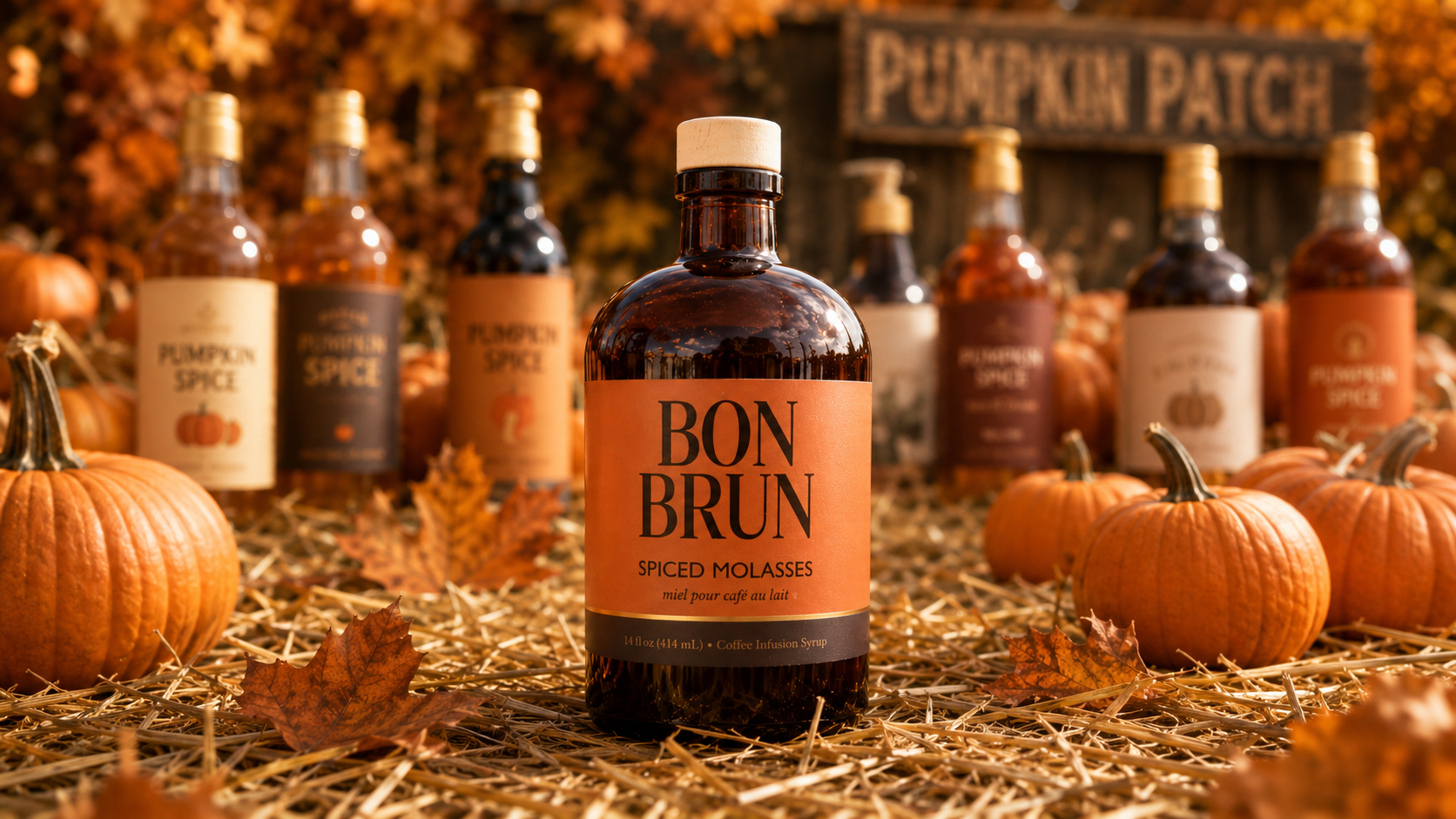
Best Pumpkin Spice Coffee Syrup: How Bon Brun Created Spiced Molasses
The Best Pumpkin Spice Coffee Syrup Doesn't Have PumpkinMost shelf-stable pumpkin spice coffee syrups do not contain pumpkin. The best pumpkin spice coffee syrup uses cashew butter to recreate that...
Read more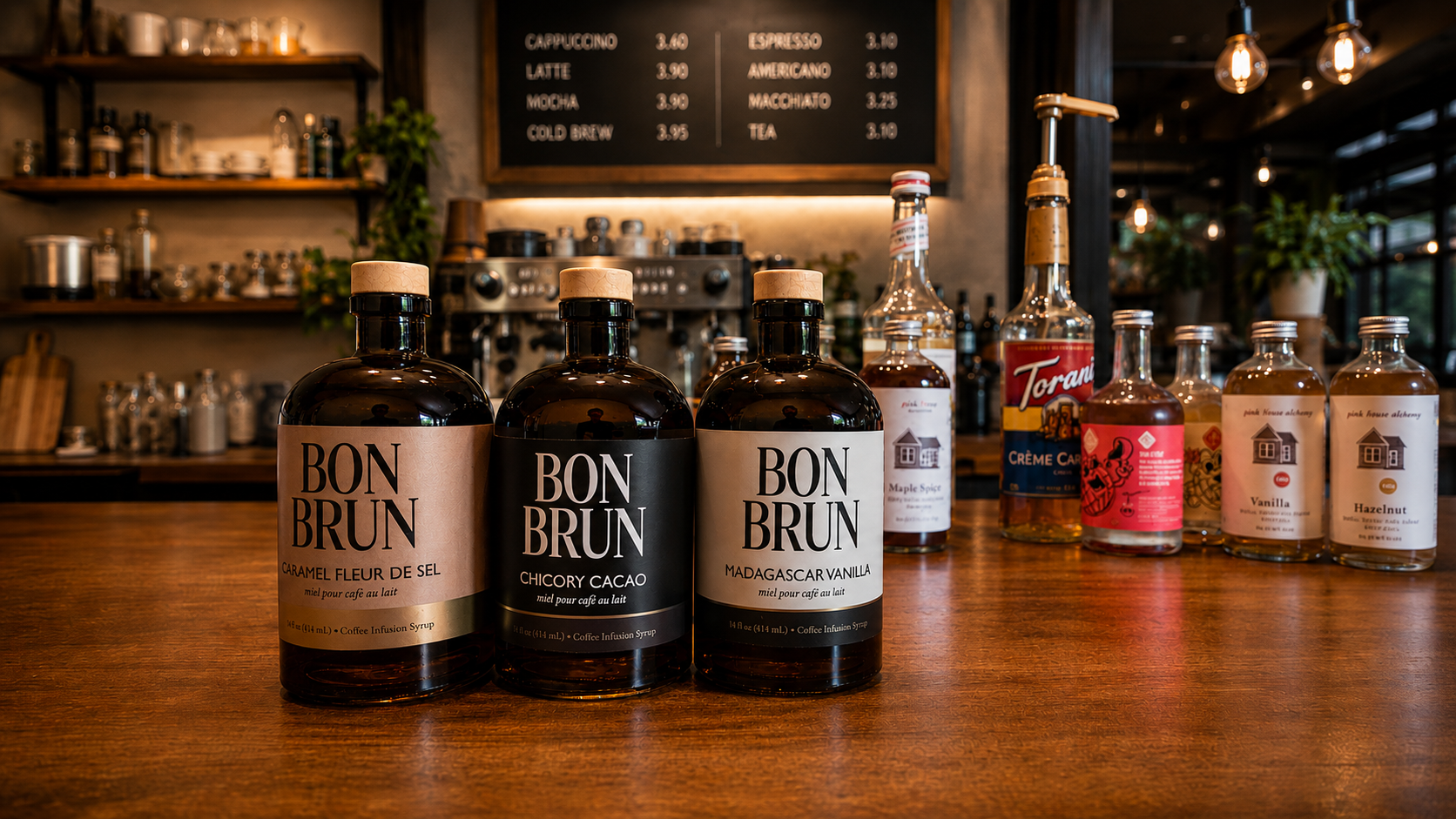
Best Coffee Syrup for Home Baristas (And How to Actually Tell Them Apart)
I went looking for a premium coffee syrup and came up empty. Here's what I found on every label, and what it means for your latte.
Read more